Criticism Post #4

The Children.

Neo Classical Criticism – Logos, pathos & ethos

Three persuasive factors can be used as part of neoclassical criticism: logos, pathos, and ethos. Logos is used to appeal to reason and is a single image that brings together the entire brand. It convinces the audience by using logic and reason. Pathos refers to appealing to emotion. It draws the audience in to help connect with the argument emotionally. Ethos can be broken down into three parts: good sense, good will, and good morals. It is the appeal to character, and convinces the audience of credibility. Using all three of these factors are modes of persuasion used to convince audiences. 

In Grace and Frankie, I believe the use of the three persuasive factors are used often throughout the series. In particular, throughout every episode, humor and pathos is used, so I will be focusing on pathos, and how the audience can connect with both characters, Grace and Frankie. Although pathos is used throughout the entire series, I will be specifically referring to one episode.

In season one, episode three, “The Dinner,” the shock and humiliation from the break-up and discovery of their husbands is still very fresh (for everyone), and a family dinner is being held without Grace and Frankie present. This is the first family dinner that Robert and Sol are having as a gay couple together with all of their children in attendance. Separate conversations happen between Sol’s sons and Robert’s daughters in regards to the dinner:

Bud: “I feel weird.”

Coyote: “It’s all weird Bud. Our father, and his boyfriend are having their children over for dinner.”

Brianna: “If I’m going to this dinner, you’re going. And Mom can’t know about this! If you breathe one word about this to Mom, I will tell her who really killed dimples.”

Mallory: “What if she calls?!”

The children are all beginning to feel guilty as the dinner is hours away. They are feeling remorse because they feel as if they are going behind both of their Mothers’ backs. This conversation is an example of pathos, as we begin to feel the empathy that the children are having towards their Mothers, because we all realize that they (Robert and Sol) are the ones who lied and cheated for over 20 years to everyone about their relationship, so why should they attend this family dinner with their Dads. Bud, Coyote, Brianna, and Mallory all make it to dinner and seem to get through it in a civil manner, but then Bud goes into the kitchen (where Brianna is secretly taking sips of alcohol) and it becomes clear that this dinner should not be happening by Brianna and Bud’s conversation regarding their Dads being together:

Brianna: “Would you be cool with it, if they were cheating with women for the last twenty years?”

Bud: “I don’t know.”

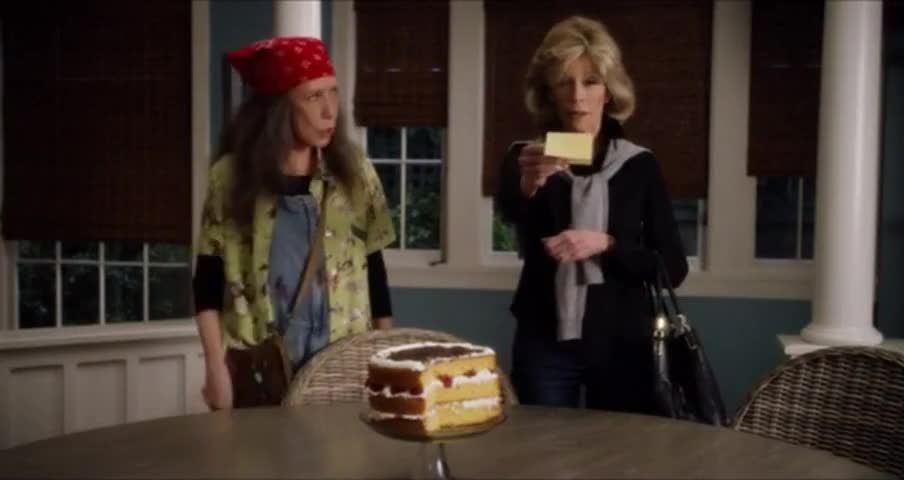
Brianna: “Please! There wouldn’t be cake. <Pointing to the cake that Bud is about to carry out back to the dinner table, for dessert.> There would be blood. Or bullets. Or something. For sure, we wouldn’t be talking about the chicken.”

Bud: “Do you think you’re the only one that’s having a hard time? Up until a week ago, I was under the impression that my parents loved each other, now I’m losing my family, I’m losing Jewish Christmas eve…”

Plenty of emotions are being present in this particular scene and conversation that is taking place between Brianna and Bud, and they realize that if Robert and Sol both cheated with women, none of them would be so supportive or present at this dinner. Here we begin to realize and see the discomfort with Sol and Robert being finally out in the open.The audience is being drawn in and connecting and able to relate in some sort of way with all these characters, whether if it’s feeling guilt for going behind your mother’s back and lying to her, having to go or see someone else go through a divorce, losing a loved one, having divorced parents yourself, family members coming out for the first time, cheating, being cheated on, etc. In the end, during dessert, the children all let their Dad’s here how they really feel about being there. They all are upset, angry, and hold nothing back. Bud says something in particular that really draws us in and makes us feel for Grace and Frankie at that moment:

Bud: “I am not even allowed to be mad!”

Sol: “Why not?”

Bud: “Cause you’re gay! If you were f@$*ing around with a woman for the last twenty years, we wouldn’t even be here, eating cake! <Stands up and picks up cake, and walks out.>. So we are not eating cake.”

The cake is a subtle dig at Robert and Sol, that they are “having their cake and eating it too.”  It’s not about them being gay, but how they were selfish. Overall, this series is about navigating as older women, as they try dating, find direction, and go through the frustrating details of divorce, all with using both humor and pathos. The children play an important role in this series and in this episode in particular, the audience gets drawn into how Grace and Frankie are feeling, and also everyone else as well.

The Cake.

Criticism Post #3

4th Persona

In this week’s post, I will be writing about the fourth persona and what I believe to be an example of it from the show, Grace and Frankie. The fourth persona shows the audience a hidden message that only specific viewers could get. It is considered a “textual wink.” When one is “clairvoyant,” you understand what the message is- you get it. You are considered a “dupe,” if you miss the message.  

In season 2, episode 9, Robert and Sol are separated, because Sol cheated on Robert with his ex-wife, Frankie, which to Robert, is unforgivable and the absolute worst thing he could do. Robert’s friend Peter, (who is in an open relationship with his husband, Jeff), tells Robert he needs to get out of the house and to stop feeling sorry for himself over his separation with Sol. He makes Robert go with him and his dog, Tina, to the dog park. Robert soon realizes,  “there’s not many women around here.”

For example:

Peter: “Because Tina needs to socialize and so do you.”

Tina is Peter’s dog and here Peter is trying to convince Robert that he needs to get out  and socialize. What is implied here, is that Peter suggests that he needs to see who else is out there and to start meeting other men. Unless you knew Peter’s character from the previous episodes, the audience wouldn’t understand what Peter was really saying, if they just started watching, or if they were just a dupe.

Peter: “Okay, so he just signaled he wants to have sex with me.”

Robert: “What?! How did you get that?”

Peter: “Because ‘Hi’ meant with ‘Hi’ <nods head> sometimes means ‘well hellooo.’”

Here, Robert is the dupe. Peter is trying to explain to Robert what is really happening at the dog park and the real purpose of their visit, which is to see and/or sleep with other men. That is why the fourth persona is a key factor to this argument, because the audience might not even know what is really going on with these characters unless they are gay or understand gay lives. Robert is still new to being gay and so he is not clairvoynant to the messages implied at this particular park, either. The audience may be learning at the same time Rober’s character is learning about the different innuendos gay men may say to each other, that mean more than what is actually said.

In our class reading by Morris, he says, “…the motto of the fourth persona: it takes one to know one” (pg. 631). I believe this is true to this episode, because you have to know/be apart of gay lives to understand what is actually going on and being said. In this case, Robert was still new to the scene of publicly being gay, so even though he (was) is in a gay relationship, he didn’t understand at first what was going on and what was actually being implied, by going to the dog park. Which some audience viewers weren’t aware of this as well.

Criticism Post #2

Neo Classical Criticism – The Canon

There are five parts that make up the Neo Classical Canon: Invention, arrangement, style, arrangement, and memory. I will not be comparing all five canons to my series I am writing about, Grace and Frankie, but I will briefly explain what each of these canons are:

  • Invention – How did they come up with it, inspiration, how did they generate it.
  • Arrangement – Putting it in order and why is it ordered this way. 
  • Style – Has to do with the person’s style/delivery, embellishment. 
  • Delivery – How is it delivered: gestures, movement, etc. How long are episodes, etc.
  • Memory – What makes it memorable, why isn’t it memorable?

In Grace and Frankie, season 2, episode 3, The Canon can be seen as Grace and Frankie embark on their journey to invent and sell vibrators, geared towards an older consumer. I believe they came up with this idea in the heat of the moment, when they were both very angry at their children and ex-husbands, and it just kind of blurted out when they were yelling at them in the heat of the moment.

The inspiration for this, however, came from their best friend, Babe,  who just passed away (in the previous episode). Grace was given a vibrator from Babe’s will, and where Babe wrote her a note, telling her “it won’t break your heart.” Grace ends up injuring herself after using it for the first time, because it wasn’t adequately equipped for women of her age. And this is how the idea of a vibrator generated into something that would continue to be in the episodes and seasons to come. 

The style for Grace and Frankie’s new product was carefully thought out for their customers they had in mind. Even though they were offered a deal to purchase their product by a well known company, they didn’t like how they were trying to market their vibrators by misleading photos of themselves looking younger. They wanted to stay true to their age and own, real appearance, so they decided to sell it directly from  themselves only, which was through their website and online store. Not only was their branding for marketing a success, but the carefully designed product became a huge success, and so was their journey of being new business owners together.

A few things come to mind when it comes to the memory of the canon… Firstly, the product Grace and Frankie invented, a vibrator, makes this very memorable because it puts into perspective on how elderly people live their lives, and we forget how human we all are, no matter what age. Creating something like this geared towards seniors, is something that makes this product one of a kind. Also, the name and how they spell it is memorable in itself, Vybrant. Lastly, other episodes go into more detail on Grace and Frankie’s new business that leave a lasting impression on us viewers. For example, in season 3, episode 1, they run into many issues trying to get a loan approved for their product. They are discriminated against for their age, and also judged by the product they are trying to sell. 

The canon is a great way to explain Grace and Frankie’s new business journey, and us viewers can see this occurring in many of the episodes in this series.

Criticism Post #1

Rhetorical Situation

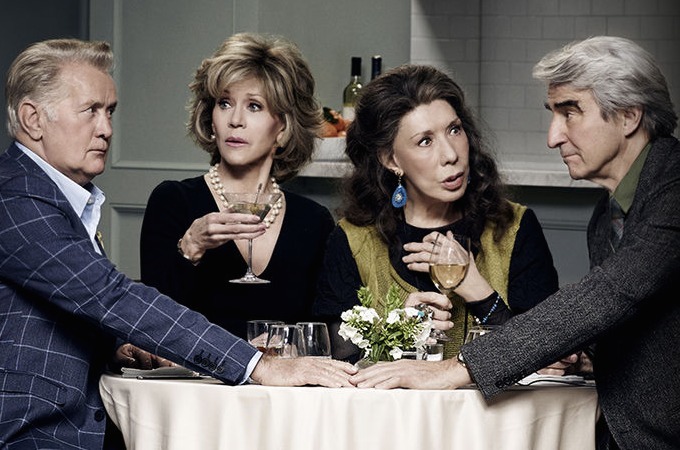
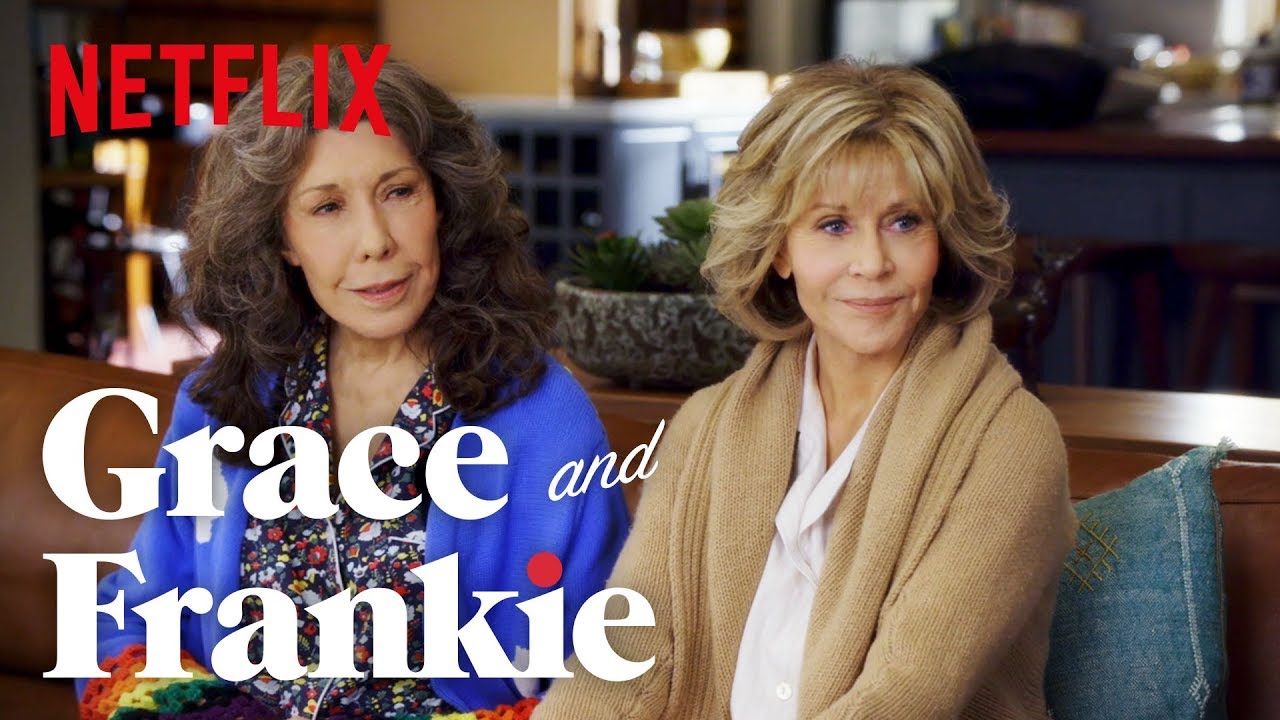
In the Netflix series Grace and Frankie, two women, who were not friends in the first place, who also have complete opposite personalities, end up living with each other after their husbands leave them. Their husbands, Robert and Sol, are business partners at a law firm, and have been secretly in love with each other for the last twenty years of their marriages. They finally come out and tell Grace and Frankie the news, over dinner together, because they want to finally get married.

In this series, we witness Grace and Frankie’s world flip upside down under this bizarre circumstance, and see how they overcome this and many other life alternating events that take place. A running theme we see throughout the episodes is learning to adapt to your new reality. That no matter how old you are, (Grace and Frankie are both in their 70’s), it is never too late for new beginnings and new memories. In this post, I will be referring to a rhetorical situation in one of the episodes. “The rhetorical situation can refer to the speaker, the subject, the occasion, speech, audience, anything surrounding or impacting what may be said,” (Bitzer, p.46).

In Season one, episode one, we see Grace and Frankie’s lives beginning to unravel in the first few minutes of the show. The rhetorical situation takes place when Robert and Sol announce that they are not only leaving them (Grace and Frankie), but that they are also in love with each other. The exigence of the rhetorical situation is when Robert and Sol make this announcement at dinner:

Robert: “I’m leaving you. And he’s leaving you.”

Grace: “Who is she?”

Robert: “Oh it’s not what you think. It’s a He. And it’s Sol. I’m in love with Sol. Sol and I are in love.”

Frankie: “My Sol?!?”

Sol: “Your Sol.”

The audience is Grace and Frankie since they are being presented with this new information, and it was intended only for them. However, the audience is also all the other people eating dinner at the restaurant, where this announcement took place, because Grace makes sure to cause a scene, so others may witness and hear this news as well.

The constraints are all characters involved in this episode, because they all take an effect on the situation that occurred. (They are also all key characters throughout the entire series). The characters involved are: Robert, Sol, Grace, Frankie, and all of their children, who find out about the news the day after Grace and Frankie were told. Sol and Frankie’s two sons find out first, Bud and Coyote, when they are invited over to their parents’ house. Shortly after, Robert and Grace’s two daughters, Mallory and Brianna, find out from Bud and Coyote, before they get to their parents’ house for dinner, which Grace and Robert were not planning on telling them just yet. All of their children are adults, with very different personalities than each other, living very different lives, (which we also get to witness throughout the series). They all take part in this situation that is unfolding in the beginning of the show, and it continues to unfold over the next five seasons.

Design a site like this with WordPress.com
Get started